Birds
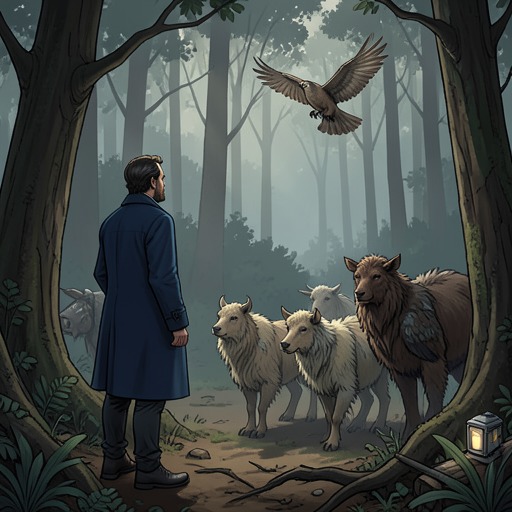
The DispossessedBirds enter Shevek’s experience of Urras as a sound that turns landscape into encounter. Their brief, high songs are not merely scenery: they give audible form to the abundance he finds on the planet and to the silence he carries in memory from Anarres.
First Encounter
Looking out over the blue and green landscape, Shevek hears a small voice beginning and stopping somewhere in the open air. He cannot identify it at first; the sound catches his breath and holds his attention. The moment interrupts his view of the valley with something he cannot yet name, making listening as important as looking.
Learning to Recognize Them
In the days that follow, Shevek reads the books that Pae brings and talks with visiting scientists. He learns the singers’ names and sees what they look like in pictures, but knowledge does not dispel his wonder. When he hears a song or catches a flash of wings moving from tree to tree, he still stands amazed, like a child. Birds thus remain more than objects catalogued by study: their presence exceeds his acquired information and repeatedly renews his attention to the world around him.
Contrast with Anarres
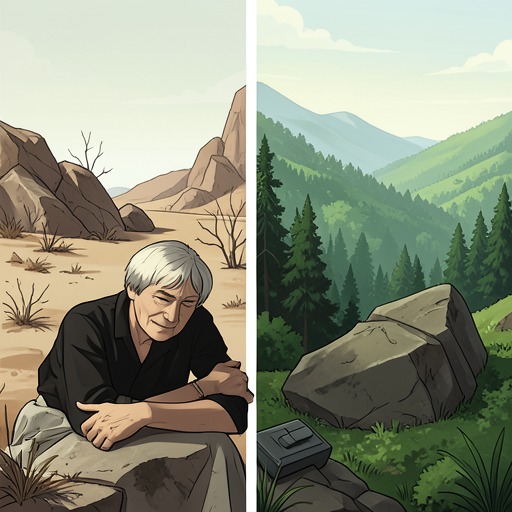
The birds’ songs acquire force through their absence from Shevek’s remembered home. At night he thinks of the utter silence of Anarres: there are no birds singing there, only human voices and barren lands. Against that silence, Urras’s bird calls register as part of a broader sensory abundance—the softness of the air, sunlight across the hills, and the pull of heavier gravity—that makes the planet feel like his race’s world and its beauty like a birthright. The contrast does not erase his attachment to Anarres; it makes the difference between the two worlds audible.
Narrative Significance
Birds mark a change in perception rather than a plot event. Shevek arrives expecting estrangement, yet finds himself feeling at home amid Urras’s unfamiliar complexity. The songs help render that response concrete: first strange and unnamed, then recognized but still capable of wonder. Set against Anarres’s human-only soundscape, they also give the novel a concise image of ecological difference, allowing the living environment to register on its own terms while shaping Shevek’s sense of where he belongs.